
Writing Process for a Type "A" Personality
The Writing Steps that Work for Me

When you picture a fantasy writer working on their next book, what comes to mind? Perhaps someone relaxing at the park with their notebook—sketching out ideas and dreaming up their main character. Perhaps someone with a messy desk overflowing with pages of notes and quirky dragon trinkets and coffee cups. But what about those Type A writers out there? Do you picture a desk neatly stacked with a writing “To-Do” list? Perhaps a spreadsheet? Color coded pens lined in a row?
As I’ve gone deeper into the writing process, it is clear that each and every writer has to figure out their own process for translating the stories floating around in their head to actual words on a page. My own haphazard writing journey has led me towards a system I have found quite useful for my Type-A-Got-To-Get-It-Done personality. This system allows my brain to put a plan in place so then when it comes to actually sitting down and writing the story, I can trust the structure and let my creativity flow.
I enjoy writing. I have fun playing around with characters and dialogue and the way a sentence sounds. The key, for me, to be able to get to the fun part, it to first put the structure in place. If I don’t, I will find myself rushing through telling the story in order to get all my thoughts and ideas on the page. I won’t enjoy the characters or bother getting to know them very well if I am worried about the plot or what color hair the best friend was supposed to have.

First things first, when an idea comes to me, it is usually in the form of a specific scene or thought that just kind of gets stuck in my head. For a couple of weeks, all I do is think about that idea. I keep a notebook where I write any thoughts that come to me. Sometimes it is a bit of dialogue, sometimes it’s what a character looks like or a name. Sometimes it’s just me trying to describe the type of feeling I get when I think about the idea and how I can transcribe that into words.
When the idea has been percolating enough (and usually when I have a full page filled with odd notes and phrases) then I sit down and actually think about how to turn it into a story. And, this, is where it gets very Type A. I’ve numbered the steps to my outline process below.
1. First, I write down a general idea for what I aim to write. About how many words? Genre? Any big themes of feelings I want to come across? And especially, what point of view will it be written in? Overall, what’s the goal and the vibe?
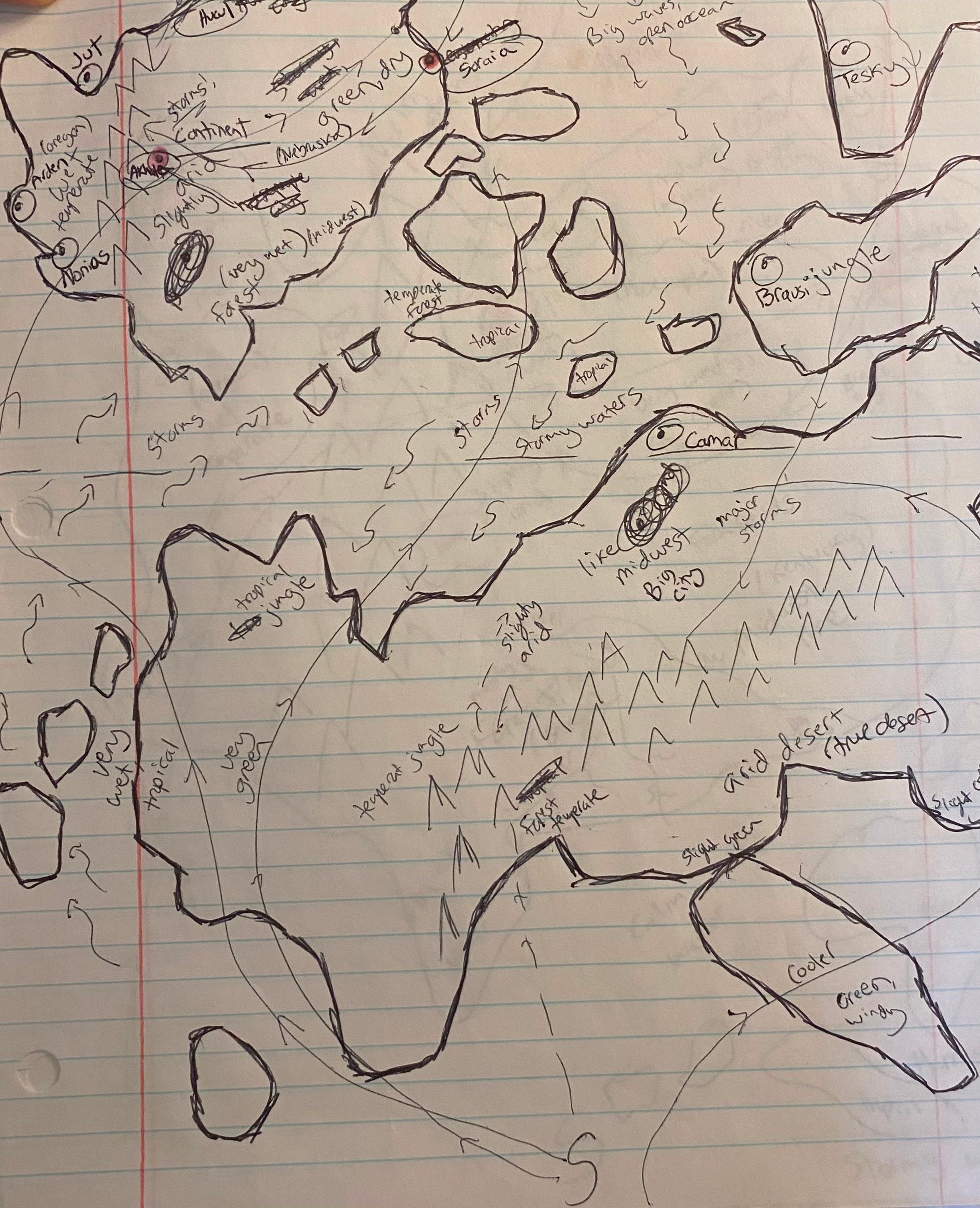
2. Then, I build the world. If fictional, I will draw a map of the entire world I am creating and label key cities, topography, etc. (I highly recommend listening to N.K. Jemisin’s MasterClass on world building!) When building a world, I think about languages and sayings, clothing, food, customs and more based on the climate and location of my story. For my urban fantasies, I don’t usually draw a map, but I will drive around the location (if I can) or research online details about the place to use in my story.
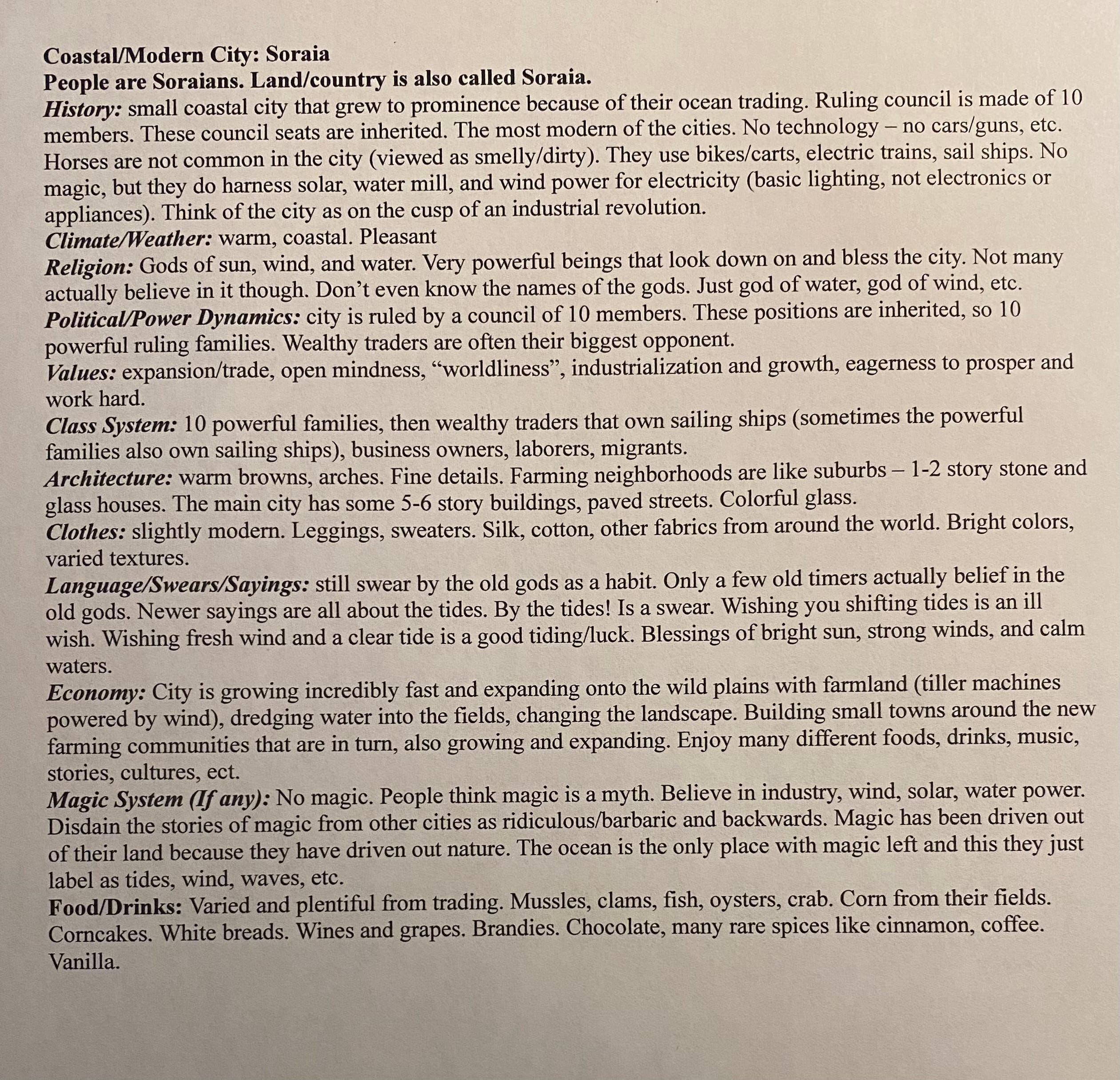
3. Building off the map, I then make a one-page sheet for each city or location I plan to use in my world. This includes a brief history, climate, religion, political system, values, class system, architecture, clothes, language/swears/sayings, economy, and food/drinks for each location. Once again, for a fantasy in which I am building a whole new world, this is pretty detailed. For an urban fantasy based in, say, Milwaukee, I just touch on a few highlights about the city. Not everything I write down will make it into the story, but it helps to make these places come alive for me so the writing is easier.
4. Then, I map out the main plot points to my story. Most of this is already in my head after thinking about it aimlessly for the past few weeks, but sitting down and forcing myself to map it out pushes me to really think about where I want the story to go and how I want it to end up. For me, I need to know the general idea of what the ending will be. As I write the story, the plot points often get changed around and fine-tuned as I make my way through, but at least I have the overall map to the end goal to help stay on track. Writing the plot points out first also helps catch initial flaws with any ideas that are not making sense. Sometimes, I will even make a separate sheet for a subplot, such as a love story.
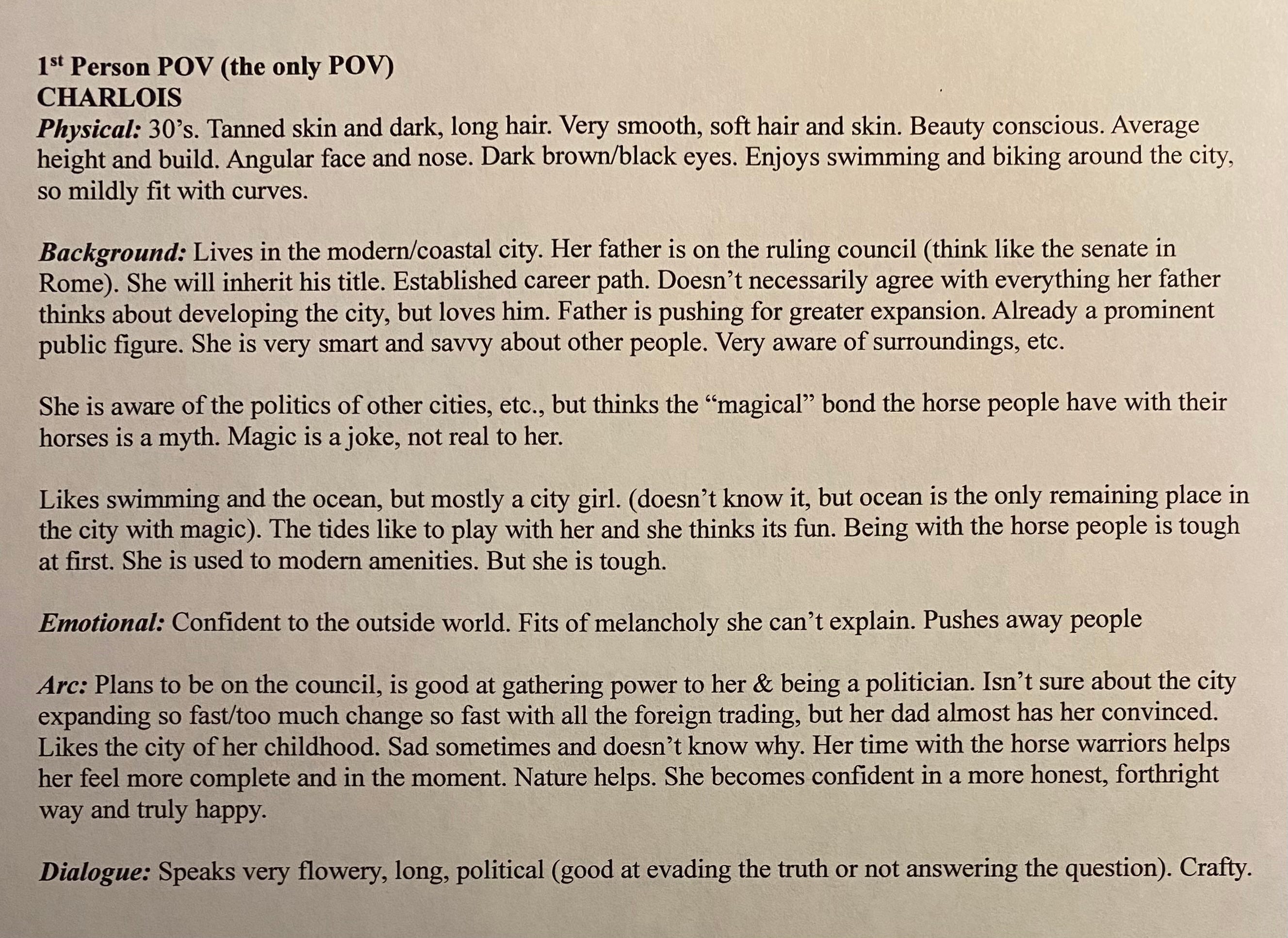
5. My favorite part is then mapping out the characters. For each main character, I make a sheet that details their physical details, background, emotions, general arc of their development throughout the story, and how they speak. Secondary characters are all on one sheet, with each character getting about a paragraph with any of the above pertinent details I think I will need.
6. Finally, I make another sheet with any other details or thoughts that don’t fit under any of the above categories. Usually, these are details relating to a magic system or any supernatural creatures that will be in the book. Maybe just details to help me remember what the weapons look like or that the best way to get rid of a demon is with iron. Or, in secondary worlds, what are the legends? Maybe there are two moons in the sky and it always rains on the third day. Whatever other thoughts I have, they all go here.
If this seems like a lot, well, it is a lot. These outlines usually take me several weeks to map out. For me, the prep work is more difficult than the actual writing of the book.
The next step to all of this is perhaps even harder, but is the most important for me. I create a loose list of chapters based off my outlined plot points. These “chapters” are just a way to organize the plot points. When I finish the book and go back to edit, these “chapters” are usually split and re-organized into the actual chapter headings to create the finished book.
The purpose of these “chapters” is to help organize all the pages and pages of detailed notes I previously created on character, plot, location, etcetera, by assigning each detail to a specific chapter.
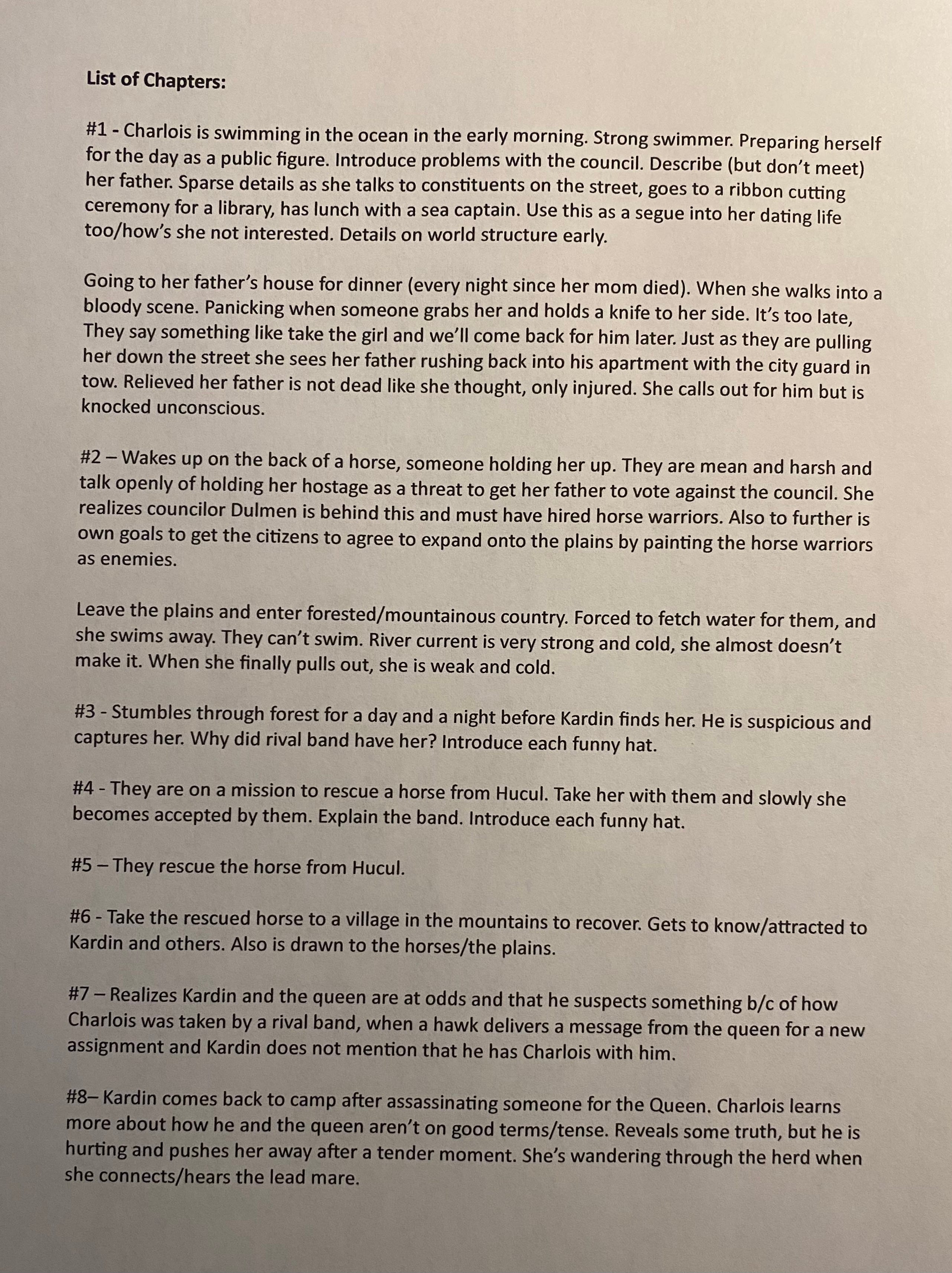
For example, take Chapter #1 in the example above. This is the plot point and what I need to make happen. I then go through my list of notes and write “#1” next to any detail I think might be helpful to give me background while writing this chapter, or something I need to include in this chapter. (Sometimes, it’s nice to know the details, even if I don’t always have to write the details). Either way, I include any and all information I think I might need that is relevant to this chapter.
In my first chapter, I might decide that I need to describe my main character, the place she lives, and introduce the magic system, so I will label all these notes with “#1” relevant to the first chapter.
For some notes, I am not exactly sure where I might need them, but I can guess based off the plot points, so sometimes some notes will get several chapter #’s next to them and I can decide later if I want to use those notes or not.
I go through all my notes and do this for every chapter until every single note is labeled with at least one corresponding chapter number.
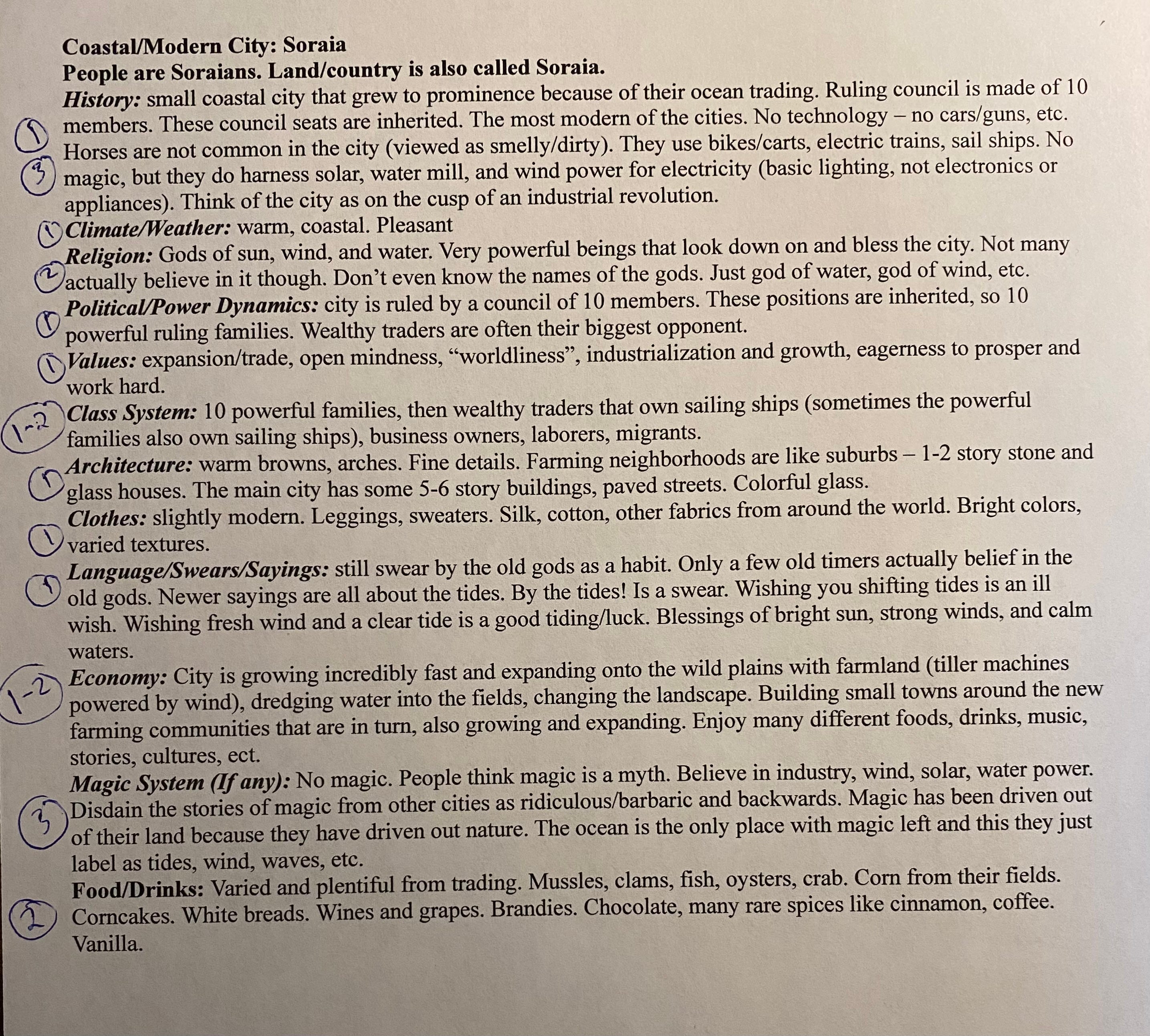
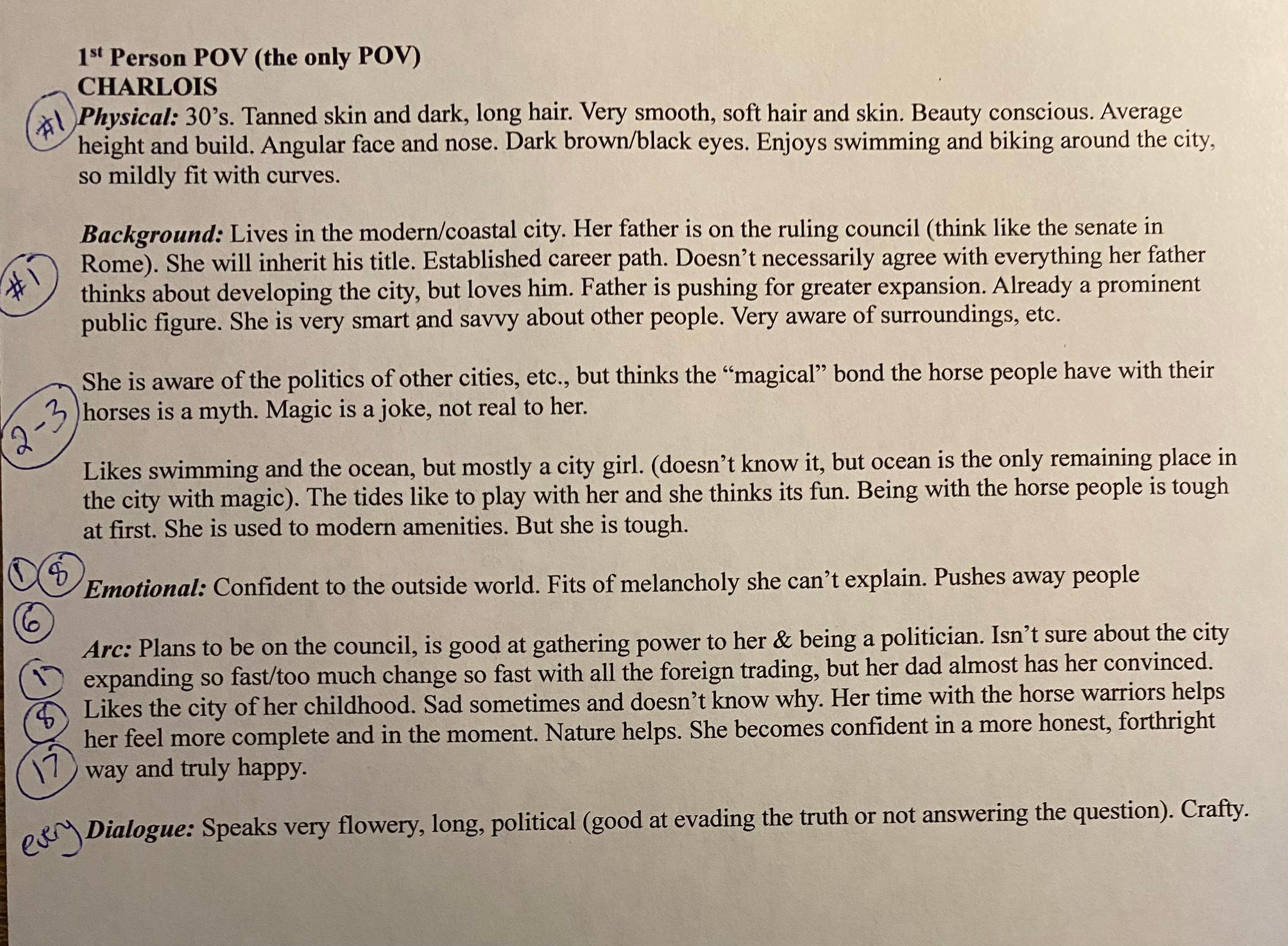
If this step seems even more over the top than the initial outlining and notes, I will be the first to admit that, oh boy, it is! (Remember, this process is for the Type A personalities out there!) I usually do this next step in one long day so as to not interrupt my flow of thought. I really have to psych myself up for this day and I usually have a headache afterwards, but the good news is that after this step, my book is basically completely mapped out with every single detail accounted for.
From here on out, everything is simply the fun of writing! When I prepare to write my first chapter, I just copy and paste my chapter plot point and all the corresponding numbered details I need onto a new document. When I finally start typing that first sentence, my mind does not have to remember all those snarled details of eye color or character ambition or what the climate is like. I am simply free to write and imagine and explore the world I have already built.
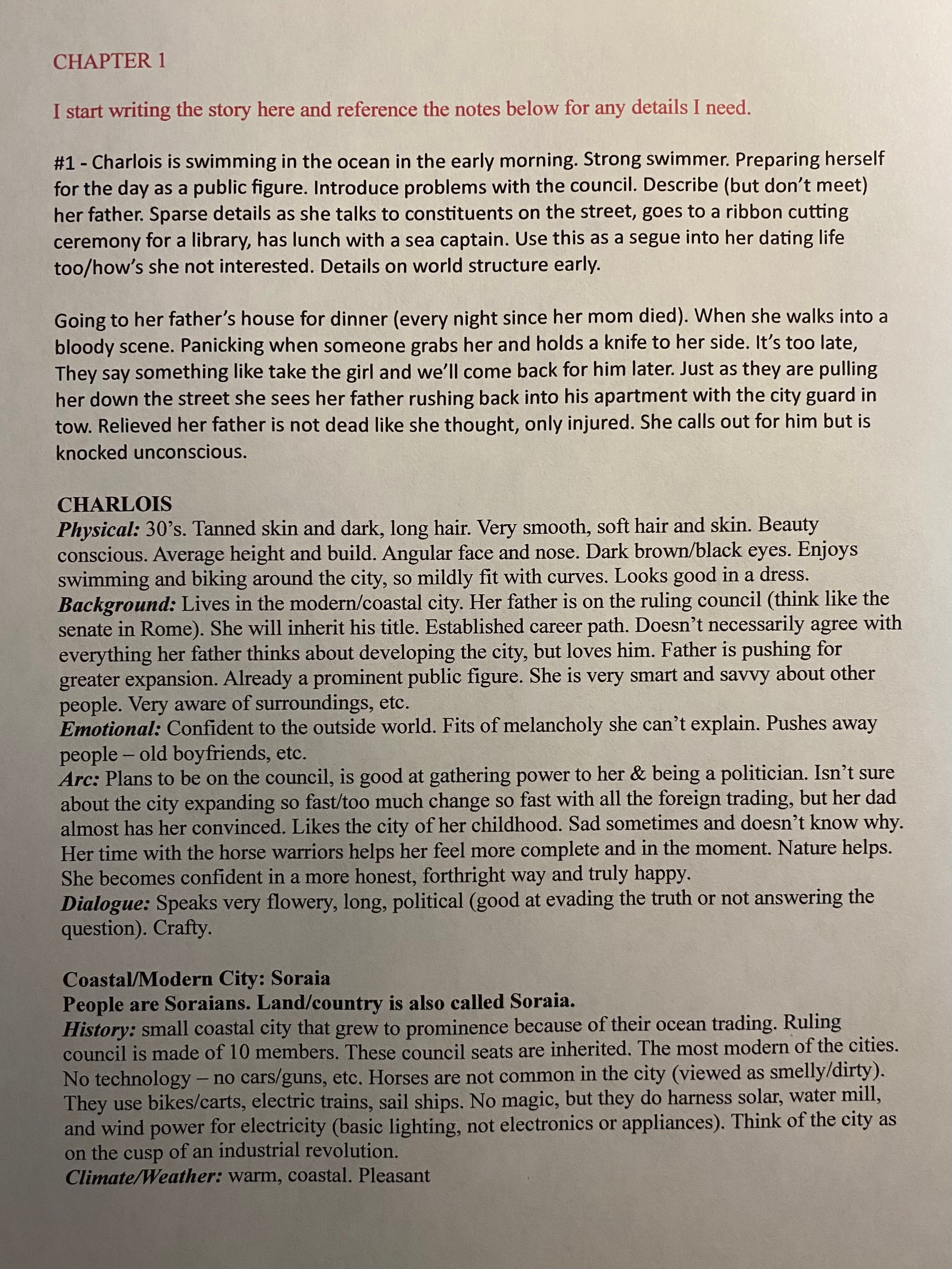
(Note: I like to copy and paste all my numbered notes for each chapter below where I’m writing on the same document so I can delete each note once I have incorporated it (almost like a checklist) and still have the original notes and details on printed sheets separately if I need. This also makes it easier to write without having to rifle through stacks of paper all the time.)
As I get further into writing the story, these notes and details and plot points usually alter. However, I can just add new notes into my chapter list so I remember when I need them, and then just keep writing. The characters start to take on lives of their own and sometimes the plot points change based on how I realize they will act, but at least I still have a general sense of where I need to go.
This process, for me, frees my analytical brain in a way that I then can become creative and have fun. The prep work for this is just that — work. The payoff, however, is allowing my mind to escape from the technical and go explore the creative.
I also feel like this helps to hold off writer’s block. You never don’t know what to write. There is always a chapter prompt and detailed notes to guide the way. Sometimes, if I’m stuck on chapter 3, I’ll just go write a scene for chapter 10 and then go back to chapter 3 later. All the chapters and details are mapped out in front of you, so it’s easier to pick and choose how you want to be creative that day.
As an added bonus, I have found that when it comes to editing — especially when it comes to continuity on the plot and overall character details like hair color, the first draft has a solid start. With lists of chapters and plot points and character arcs, creating a synopsis is also not quite so brutal as it usually is either.
This is what works for me. I’m curious to know what works for everyone else and would welcome any comments or suggestions! Creating this system has been purely through trial and error over the course of many years. Hopefully, there are other “Type A” writers out there that might find parts of this helpful!
Happy Writing,
Elise Posledni
VERY cool process Jenna. I had no idea it was that intricate! You continue to amaze me!